History of Coffee: The Bean That Changed the World
The story of coffee is a story of accident, empire, revolution, and ritual, spanning centuries and continents before arriving in the cup in front of you.

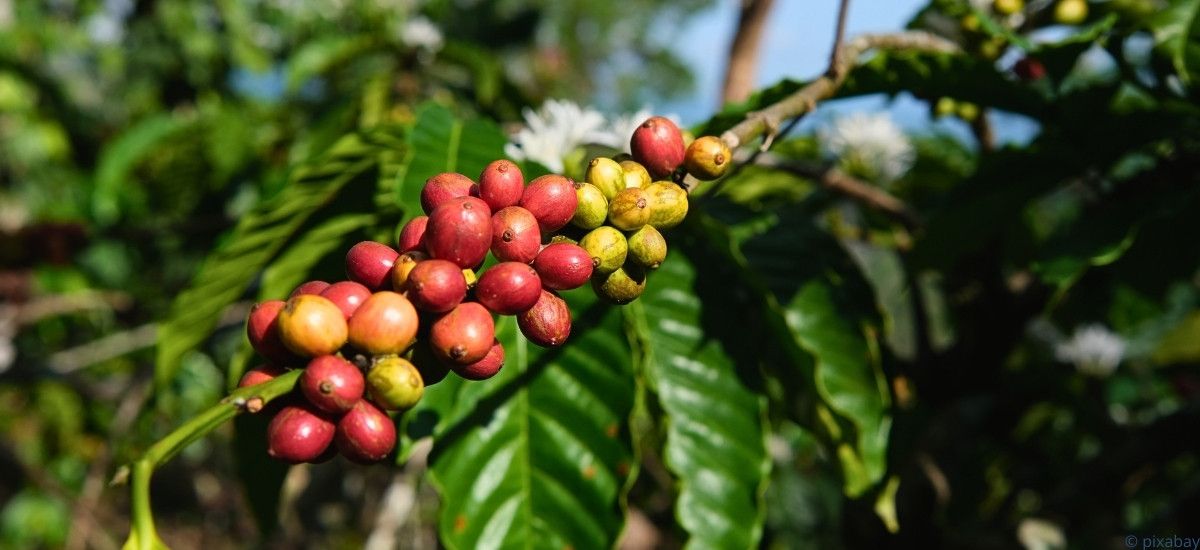
Coffee begins, as many origin stories do, with a legend. The most enduring version places us in the Ethiopian highlands around the ninth century, where a goat herder named Kaldi noticed his animals behaving with unusual energy after eating the red cherries of a particular shrub. Curious, he brought the cherries to a local monastery, where monks reportedly threw them into a fire, dismissing them as unholy. The aroma that rose from the flames changed their minds. What followed was a continent-crossing journey that would transform economies, fuel intellectual movements, and create one of the most consumed beverages on the planet.
From East Africa, coffee traveled through the Arabian Peninsula, into the Ottoman Empire, across the Mediterranean, and eventually to every inhabited corner of the globe. Its path was shaped by traders, colonizers, clergy, smugglers, and scientists, each leaving a mark on the commodity and the culture surrounding it. Understanding coffee's history is not merely agricultural trivia. It is a way of understanding how a single plant reshaped human commerce, conversation, and daily life.
Coffee is one of the most traded commodities in the world, second only to oil in value among globally exchanged good.
The Arabian Monopoly and the Rise of the Coffeehouse
The first documented cultivation of coffee occurred in Yemen during the fifteenth century, where Sufi monks used the brewed drink to sustain concentration during nighttime prayers. Yemen's port city of Mocha became the center of the global coffee trade, and for nearly two centuries, the Arabian Peninsula held what amounted to a monopoly on production. Exporting fertile coffee seeds or unroasted beans was prohibited, and all beans were reportedly boiled or partially roasted before leaving port to prevent germination elsewhere. The drink spread rapidly through the Ottoman Empire, and by the early sixteenth century, coffeehouses had become fixtures of social life in cities like Istanbul, Cairo, and Damascus.
These establishments, known in Turkish as kahvehane, functioned as gathering places for conversation, chess, music, and political debate. Their popularity was not without controversy. Ottoman authorities periodically attempted to shut coffeehouses down, concerned about the seditious potential of places where men gathered to discuss politics freely. Coffee was briefly banned under Sultan Murad IV in the seventeenth century, with punishments reportedly severe. But demand proved stronger than prohibition, and the bans were short-lived. The coffeehouse model would prove remarkably portable, traveling with the commodity itself as it moved westward into Europe.
How a Stolen Plant Changed the Western World
Coffee arrived in Europe in the early seventeenth century, initially through Venetian traders with ties to the Ottoman Empire. It was met with suspicion by some members of the Catholic clergy, who petitioned Pope Clement VIII to ban what they considered a Muslim drink. According to popular account, the Pope tasted coffee before rendering judgment and reportedly found it so agreeable that he gave it his blessing. By the mid-seventeenth century, coffeehouses had opened in Oxford, London, Paris, and Vienna, becoming centers of intellectual exchange.
London's coffeehouses were often called penny universities because for the price of a cup, a person could sit and listen to conversations on science, literature, commerce, and politics. Lloyd's of London, the global insurance market, began as a coffeehouse. The French cafe culture that would define Parisian social life for centuries had its roots in this same period. Meanwhile, the Dutch broke the Arabian monopoly by smuggling a coffee plant out of Yemen in the late seventeenth century, cultivating it first in their colonies in Java and eventually distributing seedlings to botanical gardens across Europe. A single plant gifted by the Dutch to France's King Louis XIV became the ancestor of coffee trees across the Caribbean and Central America. The French naval officer Gabriel de Clieu is credited with transporting a seedling to Martinique around 1723, reportedly sharing his own water ration with the plant during the voyage.
Early coffeehouses in London were known as “Penny Universities,” because for the price of a cup, patrons could engage in intellectual debate and hear the latest news.
From Colonial Crop to Global Commodity
The eighteenth and nineteenth centuries transformed coffee from a luxury of the educated classes into a global commodity tied to colonial expansion and, in many cases, forced labor. Brazil's coffee industry, which would come to dominate world production by the mid-nineteenth century, was built largely on the labor of enslaved people working vast plantations called fazendas. By the 1850s, Brazil supplied more than half the world's coffee, a position of dominance it has never fully relinquished. Today, Brazil remains the largest producer, followed by Vietnam, Colombia, and Ethiopia, the plant's ancestral home.
Coffee production spans the tropical belt between the Tropics of Cancer and Capricorn, a region known informally as the Bean Belt, where altitude, rainfall, temperature, and soil composition determine the character of what ends up in the cup. The two primary commercial species are Coffea arabica, which accounts for roughly 60 percent of global production and is prized for its complexity and acidity, and Coffea canephora, commonly known as robusta, valued for its higher caffeine content and resistance to disease. The twentieth century brought instant coffee, espresso machines, specialty roasting, and eventually what the industry now calls the third wave, a movement treating coffee with the same attention to origin, process, and craft that the wine world has long applied to its own product. The parallels between the two industries are not accidental. Both are deeply shaped by terroir.

The Takeaway
Coffee's journey from an Ethiopian hillside to a daily ritual practiced by billions is one of the more remarkable stories in agricultural history. It is a story defined by monopoly and smuggling, intellectual revolution and colonial exploitation, scientific curiosity and commercial ambition. The drink that sustains morning routines and anchors cafe cultures worldwide was once contraband, once condemned, and once the exclusive province of monks and merchants. What makes coffee's history particularly resonant is how consistently it has served as more than a commodity.
Coffeehouses created public spaces for ideas to circulate when few such spaces existed. Trade in coffee beans built and destroyed economies. The plant itself resisted containment, moving from continent to continent through acts of ingenuity and theft that read more like espionage than agriculture. Today, the cup of coffee on any given table carries within it centuries of human enterprise, and the simple act of brewing and drinking it connects the consumer, however invisibly, to a chain of cultivation, trade, and tradition that stretches back more than a thousand years.