Sip, Tax, Repeat: Why Beverage Prices Could Finally Get Relief
High courts strike down broad tariff powers, opening the door to lower import costs.
The relationship between trade policy and the beverage alcohol industry is older than most people realize, but it has never been more volatile than over the past year. A series of tariff actions targeting imports from the European Union, Canada, Mexico, and other nations introduced new costs across nearly every category of wine and spirits sold in the United States. The mechanics are straightforward: a tariff is a tax on goods entering a country, paid by the importer at port of entry, and that cost moves through the supply chain until it reaches the consumer. But the consequences have been anything but simple.
Imported wines and spirits represent roughly 38 percent of the U.S. wine market by volume and billions in annual trade. When tariffs shift, the entire ecosystem of importers, distributors, retailers, restaurants, and bars adjusts accordingly. As of today, the legal foundation beneath many of those tariffs has been struck down by the Supreme Court, opening a new chapter for an industry already navigating one of its most challenging periods in decades.
In a 6-3 ruling, the Supreme Court said the president does not have the authority to impose broad tariffs under emergency powers.
A Brief History of Beverages Caught in the Crossfire
The beverage industry's exposure to tariff disputes is not new. During the first round of transatlantic trade tensions between 2018 and 2022, the European Union imposed a retaliatory 25 percent tariff on American whiskey exports, a move that contributed to a reported 20 percent decline in American whiskey shipments to the EU during the year following implementation. That tariff was eventually suspended under a bilateral agreement, though the suspension was set to expire in early 2025. On the American side, tariffs of 25 percent were placed on certain European wines in 2019, directly increasing costs for importers and reshaping purchasing decisions across the three-tier system of suppliers, wholesalers, and retailers that governs U.S. alcohol distribution.
The pattern that emerged from this earlier period was instructive: tariffs on beverages tend to produce outsized consequences relative to their stated objectives because the products they target are geographically irreplaceable. Champagne cannot be produced in California. Scotch cannot be distilled in Kentucky. Tequila cannot originate anywhere outside of designated Mexican states. This fundamental characteristic of appellation-based beverages means that when tariffs are applied, consumers and businesses cannot simply substitute a domestic equivalent. They either absorb the cost, trade down, or go without.
What the 2025 Tariff Landscape Did to the Industry
The tariff environment of 2025 was marked by rapid changes, pauses, and renegotiations that made long-term planning extraordinarily difficult for businesses at every tier. A baseline 10 percent tariff on virtually all imports was established in April 2025, affecting wine, spirits, and beer from every exporting nation. Country-specific rates were subsequently modified, with European Union imports settling at 15 percent as of August, while other nations faced rates ranging from 15 to 39 percent. Aluminum tariffs of 50 percent added another layer of cost for canned beverages, including the fast-growing ready-to-drink cocktail category. For consumers, the math moved in a predictable direction. Because tariffs are applied at the import level and then marked up through distribution and retail, the actual consumer-facing increase is amplified at each stage.
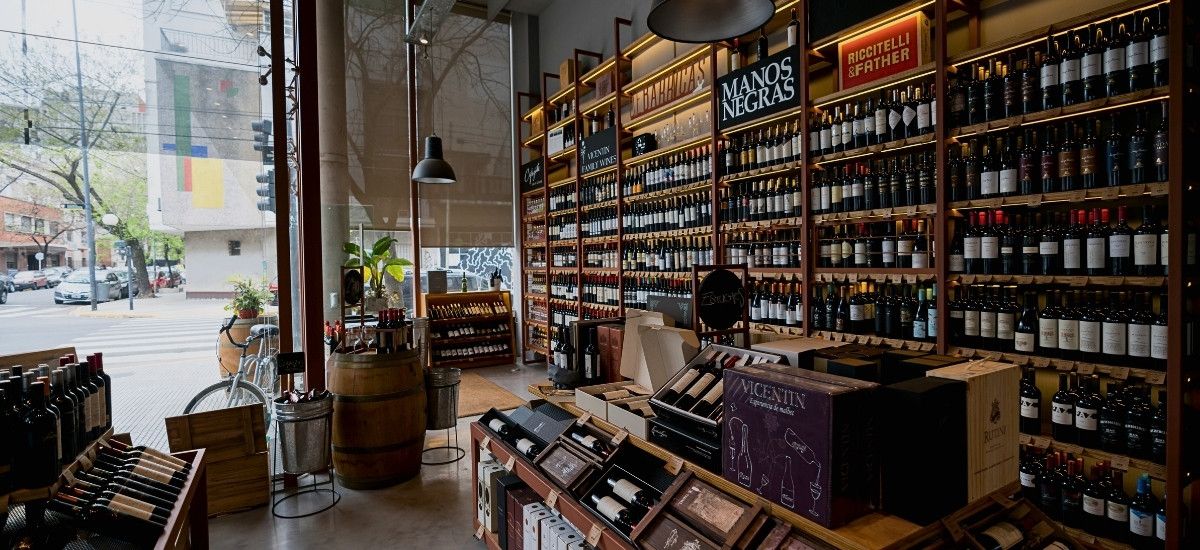
Wine list and retail prices for European imports began reflecting increases of 5 to 15 percent, with the full impact reaching consumers in late 2025 and early 2026 as pre-tariff inventory was depleted. Beyond price, importers paused or canceled shipments during periods of uncertainty, unwilling to risk goods arriving at port under unpredictable duty rates. Smaller importers, lacking the financial reserves to absorb sudden cost increases, faced existential pressure. The downstream effect has been a narrowing of imported selection, as niche producers from smaller European regions became economically unviable to bring into the American market.
A Landmark Ruling and the Questions That Follow
On February 20, 2026, the Supreme Court struck down the sweeping tariffs imposed under the International Emergency Economic Powers Act in a 6-3 decision, ruling that Congress did not grant the president the authority to impose tariffs under that statute.
The ruling invalidates tariffs that generated over 130 billion dollars in revenue through the end of 2025, representing roughly half of all customs duties collected during that period. The decision immediately raises the question of refunds for importers who paid those duties, though the court offered no specific guidance on how or whether such refunds should be administered. Within hours of the ruling, a new 10 percent global tariff was announced under a different trade statute, along with additional investigations into trading practices under separate legal authorities. For the beverage industry, the ruling does not return the landscape to pre-2025 conditions. It redirects the legal basis for trade policy while leaving the fundamental tension unresolved.
Industry groups continue to advocate for zero-for-zero tariff agreements on spirits, and negotiations between the U.S. and EU over permanent beverage exemptions remain ongoing. The months ahead will determine whether the legal recalibration produces meaningful relief or simply shifts the mechanism through which costs are imposed.
More than $200 billion in tariffs collected under the disputed power could take months — if ever — to be refunded.
The Takeaway
Tariffs on wine and spirits occupy a unique position in trade policy because the products they affect are, by their very nature, tied to specific places and cannot be replicated elsewhere. A tariff on French wine does not stimulate domestic production in any meaningful way. It simply makes French wine more expensive for the American consumer. The past year has demonstrated how quickly trade policy can reshape an industry's economics, from the price of a glass of Prosecco at a neighborhood restaurant to the viability of a small importer's entire business model.
Today's Supreme Court decision introduces a new variable into an already complex equation, but it does not eliminate the underlying reality that beverage alcohol remains caught between the forces of international trade negotiation and the simple fact that geography-specific products have no domestic substitute. What happens next depends on legislative action, ongoing bilateral talks, and the willingness of policymakers to recognize that in the world of wine and spirits, the cost of a tariff is ultimately paid not by governments or corporations but by the person holding the glass.